Why Consumer Brands Stall After Their First Viral UGC Post
Viral posts need a testing system, not just a lucky format.

Consumer brands often stall after their first viral user-generated content post because they mistake a result for a strategy. The breakthrough is building a process that can explain what worked, test what might work next, and put spending behind the strongest results. That requires better inputs, enough creative variation to learn from, and a testing loop that improves with each campaign.
Why the first viral UGC post feels like a breakthrough but isn't one
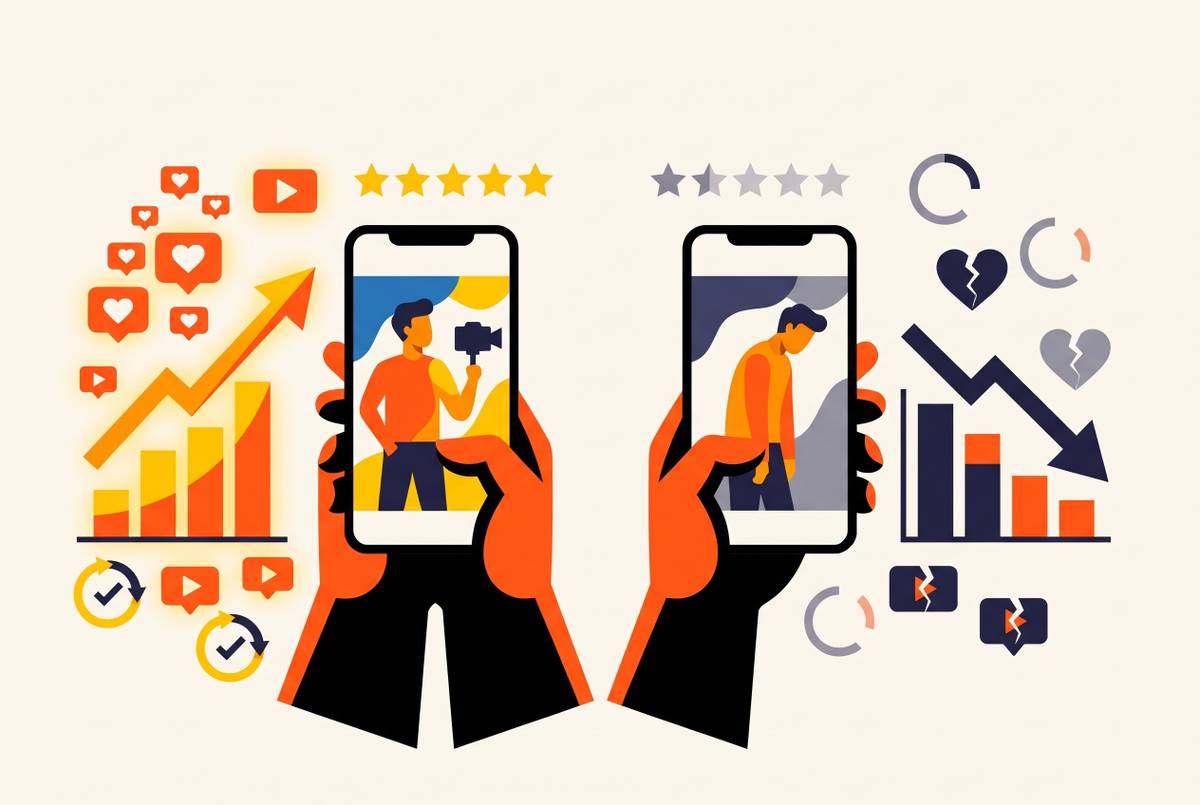
The first big post gives a brand something to celebrate. A creator’s video takes off, attention rises, and the team feels it has found a way to reach people. Then the follow-up posts arrive, and the response is quieter. The same rough style no longer gets people as excited. What looked like a breakthrough begins to feel frustratingly hard to repeat.
The natural response is to copy what is visible. The brand looks for a similar creator, asks for the same aesthetic, and repeats the format. But an unpolished appearance is not what makes a recommendation persuasive. Trust between the creator and the audience is the mechanism, while the casual look may simply be a side effect of that relationship.
What, then, has the first post actually proved? One hook landed, one creator reached a receptive audience, and one moment of algorithmic favor helped the content travel. The brand has not isolated which variable drove the result or how those conditions worked together. When later posts copy the appearance without reproducing the conditions, the team may decide UGC is unreliable. The narrower conclusion is that its process remains untested.
How format fatigue erodes results that once looked repeatable
Even a format that worked repeatedly can lose its appeal. People learn to spot the ring-light testimonial, the polished way of sounding casual, and the hook packed with selling points. Once the structure becomes predictable, viewers can identify the pitch before the creator has explained the product. Producing more of it does not resolve that problem.
Subscription apps running scripted testimonials illustrate the economic risk. Formats that performed well in 2020–2021 later coincided with sharply rising cost-per-trial and falling trial-to-paid conversions. The creative was becoming less effective at attracting people who would go on to pay, undermining the economics that had made it useful.
Testimonials can still perform in product categories where a personal account genuinely conveys value. The distinction is between creator fatigue and format fatigue, because an audience can remain open to a trusted recommendation while ignoring a familiar execution. A brand repeating the same messaging, creator type, and call-to-action is testing the audience’s patience. Consistent production only supports a strategy when the formats evolve too.
Why the brief-to-creator pipeline breaks before a single video is shot
Format fatigue comes from outside the brand, but weak briefs create trouble inside it. An overly scripted brief can feel safe because the wording is approved and the message is controlled. That safety has a cost. When the creator’s phrasing no longer resembles how they speak, the result can look like UGC while functioning like an ordinary ad.
The opposite approach is not much better. A vague brief leaves the creator without a clear goal, useful examples, or a focus on the product’s real benefits. Creative freedom cannot compensate for missing direction. The operational task is to give creators enough structure to make useful content without dictating every sentence, so the output can serve a defined purpose and still sound like them.
That structure also has to allow time for product use. A creator who has used a skincare product for three weeks can describe specifics that someone reading a brief cannot supply. Experience has to be built into the production schedule before the camera comes out.
Does the team assess whether a video could perform, or whether it likes how the video looks? A polished video may flop, while an awkward, unfiltered clip may lead people to buy. Rejecting the latter on appearance alone prevents the testing process from answering the question that the brief was supposed to support.
How creator-audience mismatch wastes spend before the ad even runs
Creator selection often starts with profiles that look on-brand, followed by follower counts and perhaps an engagement-rate check. Those signals leave the central question unanswered. Are the people paying attention to this creator also the people who might buy the product?
A fitness creator can seem an obvious choice for a supplement brand. But if the comments come mainly from teenagers who enjoy the creator’s personality rather than adults who purchase supplements, the apparent fit is misleading. The subject of the content matches the category, while the audience does not match the buyer. More reach on its own cannot fix that mismatch.
For a team making this decision, the practical step is to read comments for purchase-intent signals and review engagement on past promotional posts. The work is tedious, but it belongs in selection rather than in the explanation for a disappointing campaign. Smaller creators with genuinely trusted audiences can outperform larger accounts because their recommendations have a stronger basis. The team should also check product affinity, since a creator needs both the right look and a real reason to care about what they endorse.
Why volume and testing are the actual mechanism behind repeatable results
Once the briefs and the choice of creators lead to useful content, making more of it gives the team more to test. This is not a call to make identical videos faster. Multiple creators, styles, hooks, and formats create different possibilities for the audience to respond to. Without that variation, a brand can collect performance data without learning much about what to change.
The economic argument follows from that uncertainty. Commissioning many lower-cost videos offers more opportunities to discover one or two exceptional performers than committing everything to one expensive asset. The strongest video may be one the team would never have chosen to produce on its own.
The testing loop needs to distinguish attention from action. Hook rate asks whether the first three seconds earn a view, while hold rate asks whether the middle maintains interest. Click-through rate and conversion then show whether people who pay attention move closer to buying. Each measure points to a different problem, so an undifferentiated verdict that a video “worked” leaves useful information behind.
If the opening gets people’s attention but the middle loses it, the team needs to ask what to change in a different way than when a video gets clicks without conversions. Over time, those tests build a library of what works for a particular product and audience. Later campaigns can use what those tests have taught the team, so the library gives them a starting point beyond what they like or guess will work.
How whitelisting turns the best organic performers into scalable paid assets
Testing identifies creative worth amplifying, but distribution affects how audiences receive it. Whitelisting, also called creator licensing or allowlisting, lets a brand run a paid ad under the creator’s profile. It still has a sponsored tag. The value is not in concealing the advertisement, but in retaining the creator context while adding paid targeting.
Meta Partnership Ads and TikTok Spark Ads provide this creator-handle structure. On Meta, the ad runs under the creator’s handle with the brand as a declared partner. On TikTok, an authorization code allows the ad to run from the creator’s handle, with the brand as the paying advertiser. Permission and usage rights are prerequisites to choosing a winner.
This arrangement brings two distinct capabilities together. The creator relationship supplies a trust signal, while paid media gives the brand more control over reaching the right demographics. Organic performance can therefore inform what receives paid support rather than remaining a separate success with no next step.
For teams deciding what to amplify, performance data should take precedence over internal preference. The most polished, on-brand video is not automatically the strongest candidate. Scrappier content can outperform it, precisely the possibility a taste-led approval process may overlook.
What a program that compounds actually looks like in practice
Guava Family moved from studio creative to making much more UGC with dynamic creative testing. In its tests, click-through rates for acquisition were higher, cost per acquisition for remarketing was lower, and return on ad spend was significantly higher. The structural feature is the combination of volume and testing.
Brickhouse Nutrition illustrates why amplification results also require careful interpretation. Its whitelisted ad used a lifestyle voiceover about Pilates, while the ad run by the brand used traditional creative that put the product first and aimed for conversion. Those were different creative executions. The example therefore cannot isolate the effect of whitelisting alone, a distinction that prevents a team from turning an interesting comparison into an unsupported rule.
Paid results also leave part of program health unmeasured. Creator response rate to seeding outreach shows whether sourcing is producing willing participants, while approval without revision helps reveal whether briefs are yielding usable output. Creator retention across campaigns and time-to-content from brief to delivery complete the operational picture. These measures help explain whether the program can sustain the volume its testing loop needs.
Recurring relationships give that infrastructure continuity. Creators who return across campaigns develop product familiarity, which feeds back into more specific content and better briefs. Payment practices help preserve those relationships. Shorter net terms and paying on time show respect, while making creators wait longer for payment can hurt what they think of a brand. A program cannot keep learning from strong partners if its own operations give them reasons not to return.
How early-stage brands can build the system without waiting until they have scale
Does this require resources that only established brands have? The volume-and-testing model can be more accessible to an early-stage brand than betting its budget on one polished production. Its starting point is a cohort of creators working with different hooks, formats, and angles. The requirement is process discipline.
For an early-stage team, the practical approach is to brief that cohort together, let performance reveal the strongest work, and scale spending behind the winners. Variation needs to exist from the beginning. Otherwise, the brand risks spending the little it has on several versions of the same guess, with too little difference between them to learn much. Refreshing formats and iterating on results then become routine parts of the work before results decline.
The harder constraint is often operational capacity. Sourcing, vetting, briefing, rights clearance, contracts, payments, analysis, and iteration all need attention for the process to continue. When those tasks fall to a core team as an afterthought, the volume needed for learning becomes difficult to sustain. A full-service agency or platform can address that constraint by handling the work end to end, making a structured program possible earlier in a brand’s growth.
A partner is useful only insofar as the system improves. The goal remains a process that turns better inputs into tests, tests into learning, and learning into stronger creative and distribution decisions. Success is the ability to produce further strong results through a process that becomes more precise with each iteration. Repeatability is what separates a strategy from a lucky outcome.