What Makes a TikTok UGC Creator Different From Any Other
UGC creators sell finished videos brands own outright, not audience access like influencers do.
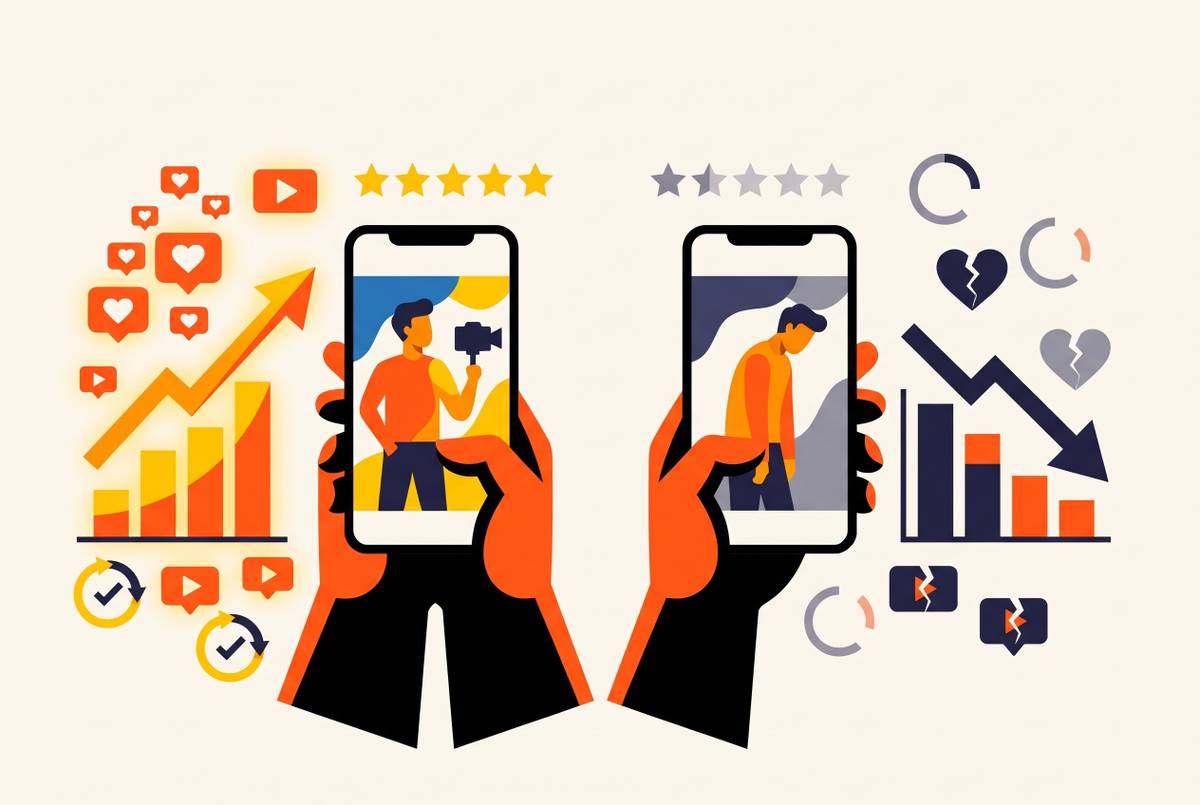
A TikTok UGC creator sells a content asset. An influencer sells access to an audience. That one distinction is the whole business model, and most marketers new to the space miss it because the two look identical on the surface: a person, a phone camera, a finished video that looks like it belongs on someone's social media feed.
Pay an influencer, and the brand is paying for reach. It's paying for a following that creator spent months or years building, plus whatever trust that audience has learned to place in what the creator recommends. Pay a UGC creator, and the brand is paying for a deliverable: a finished or raw video file, handed over and owned outright, ready to run through the brand's own channels. One guide states it directly: the brand owns UGC content the moment it's delivered, while influencer content rights have to be negotiated as a separate matter. Another comparison frames UGC creators as the social media equivalent of commercial actors. They're hired to produce a performance, not to broadcast it to anyone.
That framing changes what happens after the video is done. Own a UGC file, and a brand can run it as a paid ad, drop it onto a product page, slot it into an email sequence, or push it across three more channels, all without a second phone call to the creator. Using an influencer's post as a paid ad usually requires a new negotiation and a new fee. That catches a lot of marketers off guard, usually right after they've already budgeted around the assumption that content is content.
Why follower count is irrelevant when buying a file
If the brand is the one distributing the video, the creator's follower count stops mattering. A UGC creator with zero followers can be just as valuable as one with a large, established following, because the audience was never part of the transaction to begin with. What the brand is buying is a performance: can this person talk to a camera in a way that feels authentic, and do they understand how TikTok moves?
One comparison guide says this almost as a rule: UGC creators don't need a following. They need to be good on camera, and they need to understand what makes an ad convert. The influence is in how convincing the fifteen seconds feel, not in the profile.
That flips the entire vetting process on its head compared to influencer marketing. Fake follower counts, engagement rate audits, audience demographic breakdowns, none of that applies when there's no audience being purchased. What actually matters: does this person deliver a line with believable authenticity, do they understand the pace and conventions of TikTok specifically, and can they take a creative brief and execute it without six rounds of notes?
A fair objection comes up quickly. What about a creator who has both a following and strong on-camera skill? Can't a brand get content and distribution from the same person? Sure, and that's a real option, but it's a different arrangement with a different contract and a higher price tag, because now the brand is buying two things instead of one. What separates those two jobs is the contract and what each one is paying for, not the person.
What "owning the content" means in practice
Ownership on delivery is what turns UGC from a one-off marketing expense into something closer to infrastructure: a growing library of assets a brand can pull from indefinitely. But that ownership isn't automatic just because money changed hands. It holds only if the contract says so, in specific terms, from the start.
One comparison guide states it without hedging: the brand gets full ownership the moment the content is delivered. No extra licensing step, no separate usage rights conversation. Compare that to how influencer deals usually work: the creator keeps the rights by default, and the brand has to negotiate, and typically pay again, if it wants to use that content anywhere beyond the creator's own feed. That's one of the most consequential differences between the two models, and it appears in legal review long after the content itself has already been approved and loved internally.
Ownership means a single asset can do several jobs at once. The same video can run as a paid TikTok ad, sit on a product detail page, open an email welcome flow, and get tested as creative on Meta, all without going back to the person who filmed it. Among the content types brands lean on most for this kind of reuse: unboxing videos, testimonial and review videos, and tutorial or how-to-use videos, according to one creator marketplace's guide on common UGC formats.
None of that holds up without the right paperwork. A contract needs to specify deliverables clearly, define the scope of usage rights (which platforms, for how long, organic use versus paid use), set revision terms, and lay out payment structure. Skipping any of that turns ownership into a claim rather than a fact. The operational rule that follows is simple and non-negotiable: never start production without a signed contract and a deposit paid upfront. Revision terms should also draw a clear line between a minor edit and a full re-shoot, since those two things are typically billed at very different rates.
Where UGC content performs
UGC tends to beat polished brand creative in paid ad placements and on conversion-focused pages. It doesn't replace what only an influencer's existing audience can do: put a brand in front of people who've never heard of it. One comparison guide draws the line cleanly. UGC performs best in paid ads, on product pages, and in email. Influencers perform best for awareness, trust, and discovery.
Why does native-feeling video win in paid placements specifically? Consumers have gotten good at tuning out anything that looks like a commercial. A vertical video shot like a selfie, with none of the gloss of a studio production, doesn't trigger that same instinct to scroll past, because it doesn't read as an ad in the first half-second. One agency's guide notes that UGC ads generate higher click-through rates than standard brand ads, and that lift comes from the format itself, not from any audience the creator happens to carry.
The same logic holds outside of paid social. Short vertical testimonials placed in welcome flows and cart abandonment emails tend to beat static product photography on click-through. A single video from a single UGC brief can be the asset doing that job in an email at the same time a version of it runs as a TikTok ad.
Where does UGC fall short? It can't manufacture a new audience out of nothing. If a brand needs to reach people who've never interacted with its paid media or its owned channels, that's an influencer's job, built on a following that already exists. The brands running the strongest programs don't treat this as a choice between the two. They use influencers to generate reach and discovery, while UGC creators build the conversion layer that captures the demand the influencer work creates.
How the volume logic of UGC changes creative strategy
Because a UGC file is owned outright and costs a small fraction of a traditional production, a brand can afford to make a lot of it, and that volume is where the real strategic value sits. One video is a raw material, not a finished campaign. A single filming session can produce several different ads just by swapping the opening line, changing the background music, or testing a different text overlay, and each of those swaps counts as its own test.
How much volume is enough? One 2026 strategy guide for performance brands recommends testing between 10 and 15 creative variants every month for brands at scale. That pace keeps a steady flow of new winners coming in, makes it possible to isolate which variable actually moved the number, and catches creative fatigue before it starts dragging down campaign efficiency.
The economics make this realistic. A single traditional brand video shoot can cost many times what a package of UGC videos from several creators costs. For that same budget, a brand trades one polished video for a whole library of test-ready assets. Within that library, the hook is the variable that decides whether a video gets watched or scrolled past. What happens in the first two to three seconds decides whether someone keeps watching or scrolls on, so most serious creative testing concentrates on hook variation.
What if a brand isn't at that scale yet? The same logic still applies, just smaller. Even a modest monthly UGC budget, tested against a brand's existing paid creative over four to six weeks, produces a direct comparison on cost per acquisition and return on ad spend. That comparison either justifies spending more on the channel or tells the brand to put the budget somewhere else. Either answer is useful, and neither requires the 10-to-15-variant pace to be worth running.
UGC content amplified through paid channels
A UGC video that performs well organically can be turned into paid media through whitelisting or TikTok's Spark Ads, and this is where the investment compounds. But the mechanics behind that step are specific enough that teams who skip the details tend to get surprised later.
The most common misunderstanding: whitelisting a creator does not hand a brand blanket rights to run anything that creator has ever posted. Each Spark Ad authorization code is tied to one specific video, not to the creator's account as a whole. Authorization windows can be set for different lengths of time, and one detail trips up teams constantly: a video can't be deleted from the creator's own account while it's authorized as a Spark Ad. The authorization has to be revoked first. A creator who wants to take down an old post discovers it's still live as paid media somewhere, and the brand has to walk that back before anything can come down.
There's a smarter order of operations available here. Let content run organically first. Watch which posts pick up saves, comments, and strong retention, the signals that tell a brand a video is actually connecting. Apply Spark Codes to those proven performers. Organic traction becomes a filter that tells a brand which assets are worth paying to amplify before any ad spend goes behind them.
None of this skips FTC disclosure rules. When creator content runs as a paid ad through whitelisting or dark posting, it carries its own paid partnership disclosure obligation, separate from whatever disclosure existed on the original organic post. Disclosure language needs to live inside the ad creative itself, and legal review should happen before the amplification goes live, not after. There's a pricing piece attached to all of this too: whitelisting rights typically add a meaningful amount on top of the base fee for the content itself. A creator charging one rate for a standard deliverable will charge more once Spark Ads rights are part of the deal, and that number belongs in the original contract, not renegotiated after a video has already proven itself.
Signs your brand needs a TikTok UGC creator
Wanting a presence on TikTok isn't a reason to hire a UGC creator on its own. The real signal is a gap in production capacity, or paid creative that's losing to native-format video and has no replacement in the pipeline.
A few signs tend to appear together in a brand's creative operation. A brand might be running the same two or three creative executions in paid channels well past the point they're still working, with no new variants ready to test against them. UGC is usually the fastest way to rebuild that testing library from scratch. A second sign: a brand has influencer spend driving reach and awareness, but nothing built to convert that attention. UGC fills that gap without requiring a brand to go find and sign a new influencer relationship.
Where should an early-stage brand actually start? Product seeding, or a small paid UGC package, is a reasonable entry point. A handful of assets, tested against whatever creative is already running over four to six weeks, gives a direct performance comparison that either validates the channel or doesn't. One industry guide frames the overall split well: influencers for reach, UGC creators for conversion. The two roles complement each other.
One reason for hiring a UGC creator doesn't hold up: wanting a TikTok presence without any plan to pay to distribute it. UGC with no owned or paid channel behind it doesn't generate organic reach by itself, since it was never built to carry an audience. The better way to run this is as an ongoing relationship. Repeat work with a small roster of creators who already understand a brand's voice tends to bring down the cost per asset, speed up how fast new variants get made, and make the whole creative pipeline more efficient over time.