UGC Content Ownership Rights Explained for Brand Marketers
Paying for content doesn't mean you own the rights to use it.
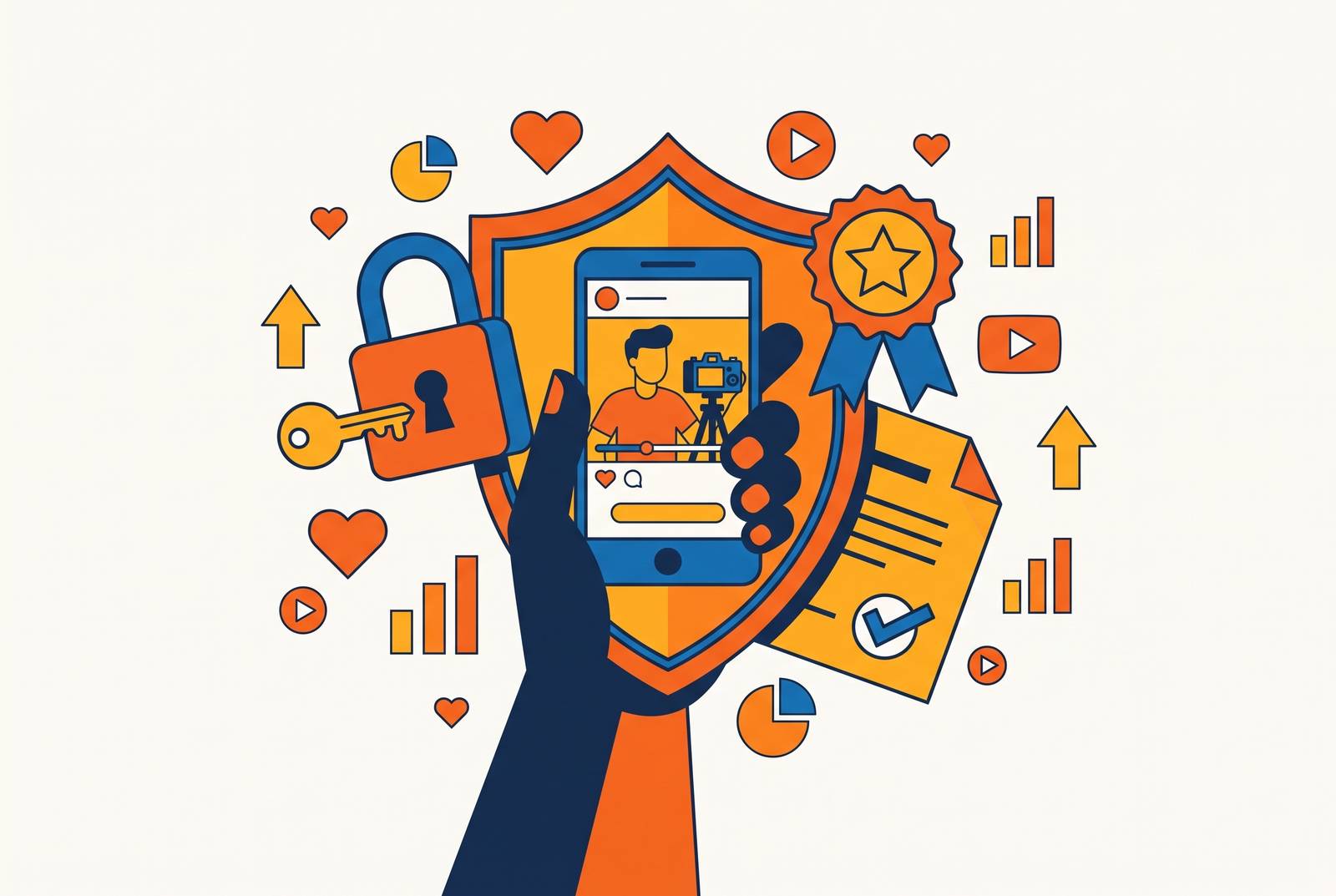
Copyright belongs to the creator the moment the work exists, under the relevant copyright statute, § 106. No registration, no notice, no filing required. It happens automatically, even when the brand wrote a check for the footage, because payment alone doesn't transfer ownership. Unless a contract says otherwise, the brand paid for a video. Not the rights to it. Those are two separate purchases, and most brands only make one of them.
Here's where the confusion starts. Brands read everyday social signals as legal permission, and none of them qualify. A like isn't consent. A follow isn't consent. A comment thread isn't a license, no matter how enthusiastic the reply.
WIPO states: "A common misperception is that works published on the Internet, including on social media platforms, are in the public domain and may be widely used without the authorization of the right owner." That belief is wrong, and it's probably cost this industry more money than any other single misunderstanding in the space.
Picture the scenario that plays out every week somewhere. A customer posts an unboxing video, it takes off, racks up a significant number of organic views. The brand slides into the comments, asks to use it, gets back "sure, go for it!" That feels like permission. It reads like permission. But a casual reply in a comment thread doesn't satisfy the requirements of a license, and if that creator later asks for payment, or demands a takedown, the brand has nothing to stand on. No signature, no scope, no term. Just a screenshot that no court will treat as a contract.
So treat every piece of creator content as owned by someone else until a signed document says otherwise. The whole rule is contained in that. Everything else here is detail sitting underneath it.
The four distinct legal layers that govern any piece of UGC a brand wants to use
Brands treat UGC rights like a single yes-or-no switch. That's the wrong model. It's four separate questions, and getting three of them right doesn't help if the fourth one's still open.
Copyright from the creator comes first: a written license spelling out exactly what the brand may do with the footage. Skip this and nothing else on the list matters, because there's no floor underneath any of it.
FTC disclosure is next, and it isn't optional or creator-only. The relationship between brand and creator has to be disclosed to the audience. The FTC's 2023 update to the Endorsement Guides made advertisers, endorsers, and the agencies sitting between them all liable for enforcement. Nobody in that chain gets to point at someone else and call it their job.
Music clearance sits apart from anything the creator agreed to, and this is where brands get caught flat most often. A large share of organic creator content runs on copyrighted music that can't touch a paid ad. TikTok's label deals cover organic activity inside the app, full stop. The moment a brand puts paid spend behind that clip, pulls the audio off-platform, or drops it into a product page, that's a brand-new unlicensed use, even though the video itself never changed. The fix is mechanical: request the raw file with no music on it before paid use is even a conversation.
Platform mechanics round it out and include Spark Ads, Meta Partnership Ads, the Paid Partnership label, and the Commercial Music Library. These tools do real work. They grant ad placement, surface disclosure, clear on-platform sound. What they don't do is replace a written copyright license, clear music for wherever the content is headed next, or cover a likeness release for anyone identifiable in frame who isn't the creator.
Clearing one layer says nothing about the other three, a point worth sitting with. A brand can have flawless whitelisting running and still be infringing on someone's song rights, or sitting with zero FTC disclosure. These aren't stages in a sequence where finishing one gets you closer to done. They're independent failure points, and any single one of them can sink the whole use on its own.
How usage rights are scoped: the variables every contract must define
A license grants permission. Usage rights define the edges of it, and the edges are where the real argument in any contract happens, because "a license" can mean almost anything depending on how tight or loose the grant gets written.
Every agreement needs to pin down platform first: rights for Instagram don't carry to TikTok or YouTube on their own. Name each channel specifically, or assume it's off-limits. Territory matters too. Content cleared for one country needs new terms the moment the brand expands into the EU or anywhere else. Duration usually runs six months to a year, with one year standard for paid campaigns, and open-ended windows are the exception, not the norm. Don't assume "ongoing" unless it's written down.
Organic and paid are two different rights, priced separately, and one never implies the other, no matter how the deal got pitched. Exclusivity is its own line item too: a brand can require a creator to sit out competitor promotions for the length of the deal, but that costs the creator money elsewhere, so it comes at a premium. And modifications need their own answer. Can the brand crop it, dub it, adapt it into something else? Does that stretch to feeding it into an AI model for training? Silence in the contract means no, not yes.
Two ownership structures sit underneath all of it. Work-for-hire makes the brand the legal author outright, and the creator keeps no stake at all. Licensing lets the creator hold copyright while the contract spells out what the brand's allowed to do, which means the creator can keep earning off that same content elsewhere. Licensing is the more common structure for independent UGC creators, and it should be, since it's the only one of the two that doesn't ask them to give up an asset they might need again.
Here's the failure pattern, and it repeats constantly. A creator agrees to one organic reshare on the brand's Instagram. The brand assumes that covers running it as a paid ad, or embedding it on a product page, or cutting it into something new for a different channel. None of that follows. A narrow grant stays narrow. Scoping exists to make exactly that point, in writing, before anyone's disappointed.
What usage rights actually cost and how pricing is structured
Usage rights don't come bundled into the content fee. They're a separate line, and the brands renegotiating later, under worse terms, are always the ones that assumed otherwise up front, dealing with a creator who now knows exactly how much the brand wants it.
Industry ranges put usage rights at 20% to 100% on top of the base content fee, sometimes as high as 150% depending on duration and type. Broken out by channel, priced monthly as a percentage of base rate: paid social ads run 20% to 30% per month, website usage sits around 25% per month, email marketing lands at 15% to 20% per month.
Whitelisting adds its own premium on top of all that, usually 50% to 100% more than standard paid usage rights, because the brand is buying the creator's endorsement and access to their audience. It's borrowing a person's face, name, and the trust their audience has already put in them.
License type shifts the math further. A non-exclusive license with a short window costs the least, which makes it the right call for testing a campaign or running something short-lived. Perpetual exclusive rights sit at the top of the range, and that price is only justified when the brand needs full control and wants a competitor locked out of the same footage permanently.
Average UGC pricing dropped 44% in 2025 as new creators flooded the market, with automated content-generation tools pushing prices down further at the bottom end. But cheaper production says nothing about cheaper rights, and this is the mistake worth naming directly: legal exposure attaches to how the content gets used, not what it cost to make. A $50 video used without the right license carries the exact same risk as a $5,000 one. Lock in rights pricing before content gets delivered. Going back to renegotiate on something already live costs more every time, because the leverage has already flipped to the creator.
What a UGC contract must contain to actually protect the brand
Verbal agreements don't hold up, a fact that governs the whole ballgame rather than a mere technicality. If rights got negotiated over a DM, a comment reply, or a phone call, the creator can forget what was promised, the brand has no way to prove what was agreed to, and the right to use that content evaporates the moment there's any disagreement. Without something in writing, brands are exposed to copyright suits, missed payments, off-brand content, and FTC penalties, sometimes all at once, sometimes from the same piece of content.
A contract that actually holds needs specific answers, not general categories. Who owns the copyright, and can that grant be revoked later? What platforms, what duration, what territory, what formats, all the scope variables above, spelled out in specific terms rather than left implied. Is paid advertising covered, and where exactly. Does the creator get attribution when the content resurfaces, and how is that handled. What's the tone, style, and quality bar, and what's explicitly off-limits. What are the payment amounts, timing, and method. What happens to any unreleased product or campaign detail the creator saw ahead of launch. What happens to the content and the license itself if the relationship ends. Who's on the hook if the creator used someone else's music or someone else's image without clearing it first. And is it explicit, in writing, whether the brand can edit, adapt, or feed the piece into an AI model.
A clause reading "brand may use content for marketing purposes" and stopping there is closer to a wish than a grant of rights. It names no platform, sets no duration, touches no territory, and it tends to fall apart the moment anyone actually tests it.
Managed UGC platforms that handle creator relationships on a brand's behalf usually build standardized rights agreements straight into the workflow, which is a real part of why brands running programs at scale work through a managed system instead of sourcing every creator one contract at a time. It's less about convenience and more about consistency: the same clauses, the same scope, every single time.
How whitelisting and partnership ads work, and what they do not cover
Whitelisting, also called allowlisting, lets a brand run paid ads directly from a creator's account. The ad shows up under the creator's name and photo, their social proof, not the brand's own handle. Meta calls its current version Partnership Ads. TikTok calls its version Spark Ads. Same idea, different mechanics on each platform.
On TikTok, the creator generates a unique video authorization code and hands it to the brand, who enters it into TikTok Ads Manager. Authorization windows vary in length depending on the campaign setup. Meta updated Partnership Ads in December 2025, expanding what creator content can be used in paid placements. Meta reports these ads running at a 19% lower cost per action than standard campaigns.
Worth reading the next figures as platform-reported, not independently audited, though they're still notable. TikTok's internal testing found Spark Ads pulling a 134% higher completion rate and a 69% higher conversion rate against standard In-Feed Ads. Meta's own 2022 Marketing Science analysis, drawn from 15 advertiser split tests, is probably the strongest data point in the mix: Partnership Ads delivered measurably better performance than standard campaigns on click and cost metrics, according to Meta's own reporting.
None of that changes what whitelisting actually is: a distribution tool, nothing more. It doesn't transfer ownership of the account. It doesn't hand the brand automatic intellectual property rights over the content. A Spark Ad running for 60 days doesn't create perpetual usage rights if the underlying contract never granted them in the first place. And platform music licenses stay on-platform, so the moment paid spend runs behind a post using a non-commercial track, that's a fresh unlicensed use, whitelisting active or not.
Both platforms offer guidance on managing ad fatigue. but neither touches the legal question underneath the whole setup. Both are worth knowing, but neither touches the legal question underneath the whole setup. The copyright license, the music clearance, and the likeness release for anyone else caught in frame are separate requirements. They need to be settled before whitelisting goes live, never assumed to ride along with it.
Building a creator program where rights are handled before content ships, not after
The pattern that gets brands into trouble looks the same almost every time: source the content, approve it, post it, and only then start asking about permissions. By that point the content's already circulating, and the exposure already exists whether anyone's noticed yet or not. This is the sequencing most teams get backwards, and it's worth naming as the actual root cause rather than a minor process gap: fixing rights after the fact costs more, and it hands the creator every bit of leverage in the conversation.
The fix is sequencing, run in the right order for once. Move rights scope, contract terms, and music requirements into the creator brief itself, before a single frame gets shot. A solid brief states the platforms, whether paid ads are in play, what territory the content covers, how long the rights need to run, and whether the brand needs a raw file with no music laid over it. Creators who get that information upfront price the rights accurately from the start, because they know exactly what they're selling. Retrofitting those terms onto content that already exists puts the creator in a stronger negotiating position, and the conversation tends to be harder than it would have been upfront.
Music clearance belongs in pre-production, not as a surprise after delivery. Asking for the raw file without music from the outset clears out the single most common obstacle standing between a piece of content and a real paid media push.
Contracts and payment terms need to close before the content ships, not after the brand's already posted it and the creator's realized who's actually holding the leverage now.
At real scale, this turns into an operational job on its own. Someone has to track license expiration dates, territory scope, and channel permissions across dozens or hundreds of pieces of content running at once, continuously, not as an annual cleanup project. Rights that aren't actively managed tend to lapse quietly, and nobody notices until the brand's still running an ad on content whose license expired months ago.