Vetting UGC Creators Before You Pay Them
Vet creators on authenticity and brief compliance, not follower counts, before spending a dime.

Paying a creator before you've vetted them is where UGC budgets go to die quietly. The creator pool has nearly doubled in about a year, and that flood of supply has made the noise louder. More fake portfolios, more inconsistent delivery, more brands finding out the hard way that a nice-looking profile doesn't mean a reliable creator. This piece walks through the checklist I use before a single dollar moves.
What brands are actually buying when they hire a UGC creator
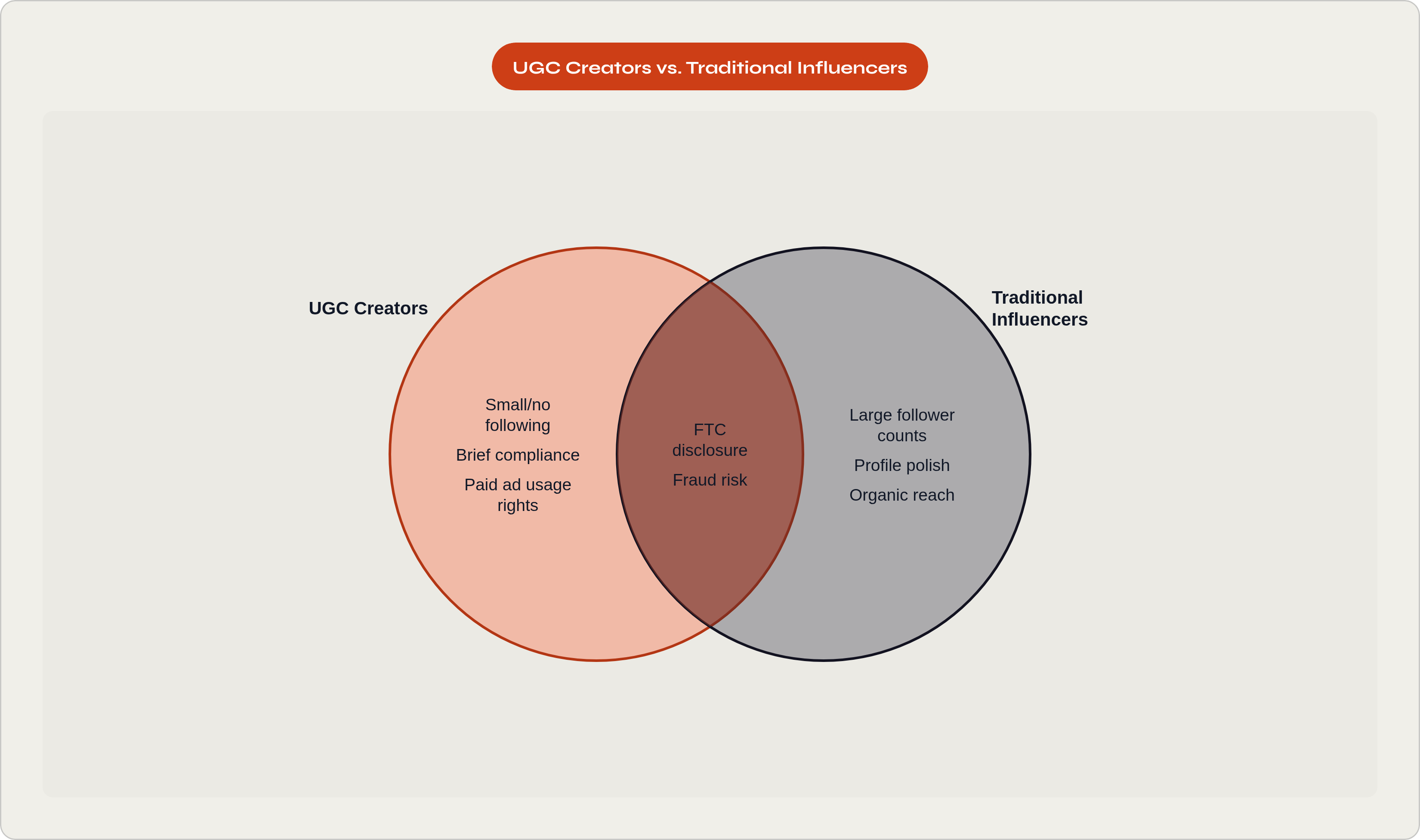
Here's the thing people get wrong out of the gate: UGC creators, unlike traditional influencers, usually have small followings, sometimes none at all. What you're actually paying for is their ability to produce authentic, on-brief content that your brand can run as an ad.
That distinction changes everything about how you should filter candidates. Follower count, profile polish, production value, all of it becomes nearly irrelevant. What actually predicts whether a creator will perform:
- Camera confidence, meaning natural delivery rather than an actor reciting lines
- Brief compliance, meaning they can follow direction without sounding like they're reading a script
- Audience match, meaning they look and sound like your actual customer
- Consistency, meaning one good video isn't a track record, it's a coin flip
A raw, slightly rough clip that drives clicks beats a beautifully lit video that converts nobody, because quality in UGC is functional rather than aesthetic. So when the content's whole job is to feed a paid media budget, a creator who can't follow a performance brief just isn't a viable hire, no matter how good their reel looks on first watch.
The real cost of skipping a vetting process
Influencer fraud costs brands billions globally each year, and that number keeps climbing as social commerce keeps expanding. Fake engagement isn't some rare edge case either, since a meaningful share of accounts on major platforms show clear signs of manipulation: purchased likes, bot comment rings, inflated follower counts.
Here's a detail that surprises people: fake follower rates actually get worse as accounts get bigger. The larger the account, the higher the odds a meaningful chunk of that audience is fabricated, which means the metric most brands lean on, follower count, is often the least trustworthy signal in the entire evaluation.
Most brands still default to surface metrics: follower counts, view counts, gut impression, and that's exactly what fraudulent creators are built to exploit. There's a legal layer on top of this too, since the FTC's Endorsement Guides explicitly ban fake or inflated social proof, and enforcement has been an active priority. Ship content from a creator with fabricated metrics and your brand can get pulled into that liability alongside them.
Fraud isn't even the main leak, though. Even honest, well-meaning creators who miss deadlines or need three rounds of revision quietly drain budget through delays and unusable files, and that cost never shows up as a line item; it just shows up as time you didn't get back.
Reviewing a creator's portfolio with the right questions
Watch the videos first, before reading the bio or scrolling the profile grid, and don't let a nice aesthetic prime your judgment before you've seen the actual work.
The core question I ask myself on every video: does this feel like a real person sharing a real opinion, or someone reading off a card? Scripted delivery defeats the entire point of UGC, and authenticity is the mechanical reason this content format outperforms polished brand creative in the first place.
Look for range. Can they do a testimonial, a demo, an unboxing, a problem-solution format? Or does every single video follow the exact same structure with different products dropped in? Range tells you whether they can actually take direction or whether they've got one trick.
One strong signal I always check: has any of this creator's past work been reused in paid ads? Brands don't reinvest media dollars into creative that flops, so if you see paid amplification on their portfolio pieces, or brand accounts reposting and tagging them, that's real corroboration, not just a hunch. And check audio and lighting, not for studio polish, just for usability, because tinny audio or blown-out visuals make a video unusable for paid media no matter how good the actual pitch is.
Checking content consistency over time, not just peak performance
One great video can be luck, but a brand running an ongoing paid media program needs repeatability more than luck.
Scroll back through the portfolio. Does quality hold across three, five, ten pieces, or does it fall off after the first couple? That decline tells you something important: maybe the standout piece got extra attention or a lucky edit, and the rest is closer to their real baseline.
Also watch how they handle categories outside their comfort zone. A creator who's mostly done skincare content, put in front of a kitchen gadget brief, should still adapt their delivery to fit. If everything sounds identical regardless of the product, that's a ceiling, not a stylistic choice.
Creators with a track record across multiple brand categories have proven the one skill that actually matters at volume: they can take a brief and run with it. That's worth more than a single viral clip ever will be.
Testing communication reliability before any money changes hands
A gorgeous portfolio means nothing if the person ghosts after you send product or a deposit, so test communication before you test creative.
Ask something specific in your first outreach message, something that requires a real answer rather than a copy-paste reply. Confirming turnaround time on a product demo works well. How fast they respond on a weekday, and how they respond, tells you a lot about their working style.
Pay attention to how they engage with the brief itself:
- Creators who ask about talking points and how much creative latitude they have are usually the stronger UGC talent
- Creators who ask for a full script tend to produce less authentic content, and it can signal they haven't done much UGC work specifically
- Creators who ask nothing at all may not have actually read the brief
Complete sentences, confirmation they've read the brief, questions flagged upfront: these predict how much hand-holding you'll need on every single deliverable going forward. A high-maintenance creator costs you real time even when their final content is good, since every extra back-and-forth is overhead nobody budgeted for.
Clarifying usage rights before content is created
Usage rights determine what you can actually do with the thing you just paid for.
Organic rights, meaning the creator posts it on their own page, and paid amplification rights, meaning you run it as an ad, get priced and scoped completely differently. Mixing these two up is one of the most common and most expensive mistakes I see brands make. Before any payment goes out, get this in writing:
- Whether you can run the content as a paid ad, and on which specific platforms
- How long those usage rights last: a fixed term and unlimited perpetual use are very different deals
- Whether whitelisting or creator licensing is bundled in or billed separately
- Who owns the raw, unedited footage if you ever need to re-cut it later
Exclusivity matters more than people think, especially in competitive categories. Find out after signing that your creator is also making content for a direct competitor, and that's a mess you could've avoided by asking on day one. Disclosure requirements need confirming too, since your brand carries some responsibility for making sure sponsored content is labeled properly under FTC guidance, and a creator who pushes back on disclosure norms is a liability you don't want.
Running a low-cost paid test before scaling a creator relationship
The single best vetting tool I've found: commission one small paid project before committing to any real volume.
Pay the creator's standard rate for one video. That single transaction validates portfolio quality, communication reliability, brief compliance, and how they handle usage rights, all at once, at low risk. A successful test looks like this: delivered on time without you chasing them down, actually on brief rather than a creative reinterpretation that ignores your talking points, needing only one light round of revision, and files that come in the right format and resolution for paid media use.
Test a small cohort at once, something like three to five creators, rather than one at a time. That gives you enough variation to compare formats and messaging side by side. It also naturally filters out the creators who talk a great game in outreach and then underdeliver once the camera's rolling.
Using a scorecard to evaluate creators consistently across a roster
Evaluating five or ten creators purely off gut feeling produces inconsistent calls. What looks compelling on a Monday can look mediocre by Friday, and that's not a knock on your judgment, it's just how memory and mood work.
A scorecard fixes this by forcing the same criteria across every candidate:
- Content authenticity
- Audio and video usability for paid media
- Format variety across the portfolio
- Brand and audience alignment
- Communication speed and professionalism
- Price relative to quality and reliability
Weight authenticity the heaviest, since it's the one thing you genuinely can't coach out of someone through feedback rounds. A creator who scores a little lower on production polish but delivers fast with minimal back-and-forth is often worth more at scale than a technically gorgeous creator who takes twice as long and needs constant hand-holding.
Keeping scores over time also builds something useful: institutional memory, showing which profiles kept performing and which sourcing channels kept producing winners. That memory compounds.
Red flags that should end a creator relationship early
Late delivery is the cleanest signal there is, especially the second time it happens without a heads-up beforehand.
Repeated failure to follow the brief, even after specific feedback, tells you this is a fit problem. Passive communication, meaning slow replies, vague confirmations, zero proactive flags, predicts ongoing coordination headaches down the line. And content that needs heavy revision every single time isn't actually cheaper than paying a pricier creator who delivers clean work the first time.
If managing someone costs more time and energy than what they're producing is worth, you're absorbing that cost invisibly. No extra invoice shows up for it, but it's real. Vetting doesn't stop at the hire either, and performance should keep feeding back into your scorecard, with creators who slip getting rotated out rather than kept around out of habit.
Where to source creators who are already partially vetted
UGC marketplaces like Insense, Billo, and JoinBrands offer pre-screened rosters, standardized workflows, and fixed pricing that cut down on upfront vetting work. That convenience comes with a trade-off though: less control over exactly who you're working with, and these platforms tend to fit one-off content needs better than long-term program building.
Sourcing directly from social platforms gives you more control, but it means the full checklist above applies in its entirety, no shortcuts.
The real bottleneck for many brands is coordination rather than sourcing. Managing a real roster, beyond a small handful of active creators, takes either dedicated internal capacity or a partner built to handle that volume. Without real systems in place, coordination overhead grows faster than the creative output does, and one person managing this alone hits a ceiling fast, often well before quality starts breaking down.
That's the gap agencies like Pebble are built to close: sourcing, vetting, briefing, contracts, payments, and performance tracking, handled end to end. For brands that need high-volume creative without building an internal ops team from scratch, that infrastructure is worth its weight.