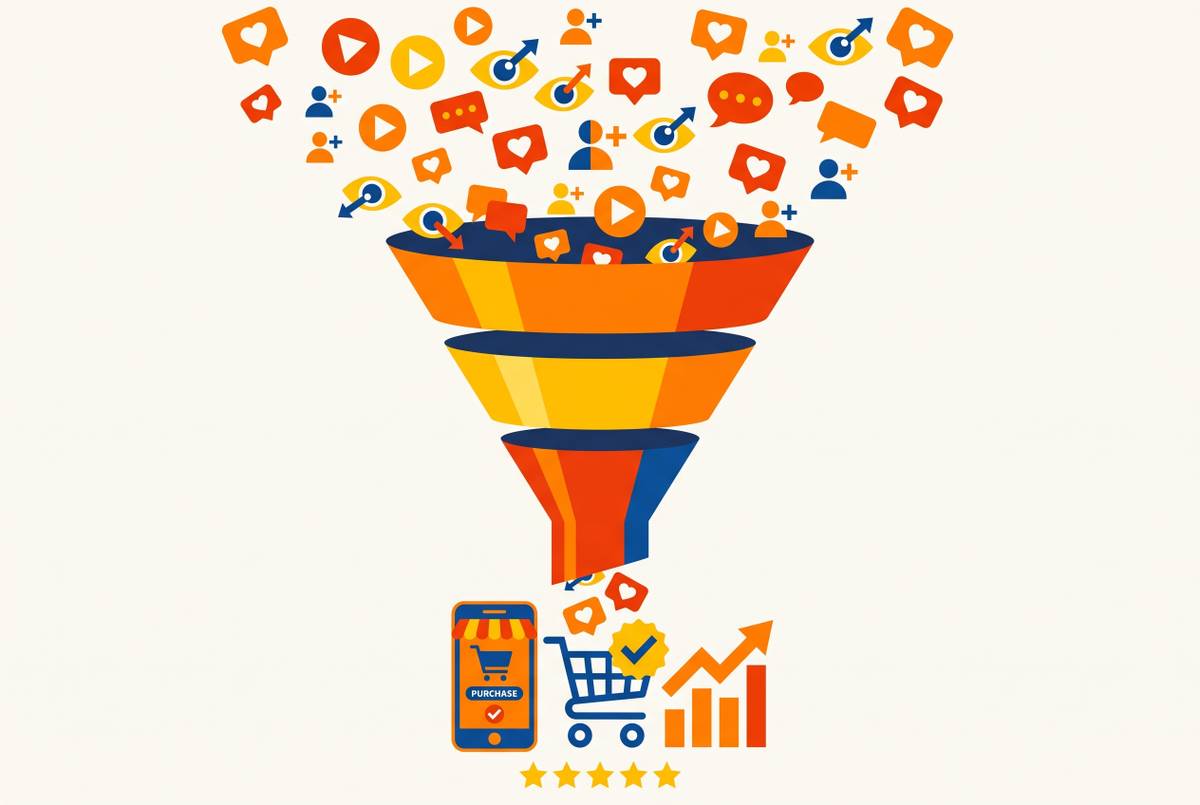
Repurposing Organic UGC as Paid Meta Ads
Real organic content needs a systematic pipeline to find, license, and deploy.

Repurposing organic UGC into paid Meta ads sounds like a copy-paste job. It isn't. Getting a real customer's video off someone's phone and into a live campaign takes a pipeline: find the content before it disappears, lock down rights, set up the ad correctly inside Meta's system, then read the results well enough to know what happens next. Skip a step, and the whole thing falls apart somewhere between "this content looks great" and "this ad is actually running."
What "UGC ad" actually means before building any pipeline around it
The term gets used loosely, and that's a problem before anyone even opens Ads Manager. Three separate things hide under the same label, and mixing them up is where most confusion starts.
Real customer content comes from an actual buyer, used with permission. It's the rarest of the three, and most brands that have any got it through seeding campaigns or because they've built an organic-first following where people post about the product without being asked.
Paid-creator content styled to look like UGC uses a phone camera, a casual tone, selfie framing. This is most of what's actually running in ad accounts today, made by creators paid specifically to look unpolished. Then there's AI-generated UGC, built by tools like Arcads, HeyGen, and Captions AI from a script or an avatar. It's gaining ground fast for hook testing and for localizing the same ad across languages without reshooting anything.
Here's the part that matters most: the algorithm and the viewer both respond to visual style, not to who actually shot the footage. A real customer's video and a paid creator's video can sit side by side in the auction and look identical. So why bother sorting them out at all?
Because sourcing is the hard part, and real organic content is the one category many brands still struggle to capture systematically. It also carries the highest ceiling for trust, since nobody made it with an ad brief in mind. That's the focus here: content that already exists, posted by a real customer, before a media budget ever touched it.
A few terms matter for later. Usage rights means permission to use someone's content at all. Whitelisting (also called allowlisting) means permission to run paid ads from the creator's own handle. Content licensing means running that same asset under the brand's handle instead. A dark post is an ad that runs without ever showing up on the creator's public grid. Partnership Ad is Meta's current name for what used to get called branded content ads or whitelisted ads.
People trust a peer's recommendation more than a brand's own pitch, and they trust a brand more when real UGC shows up in its marketing, but That trust signal is one of the clearest arguments for treating organic UGC differently from produced brand content.
How to capture organic UGC systematically before it disappears
Customers post constantly. Stories vanish in 24 hours. A TikTok mention gets buried under new posts within days. An unboxing video goes live at 11pm while the brand's social team is asleep. None of this waits for a Monday content review.
Most brands rely on tagged posts, branded hashtags, and a shared spreadsheet to track it all. That catches a fraction of what's actually out there, and the rest just expires, unseen. What disappears with it includes far more than goodwill. It's creative that's already proven itself with a real audience, content that costs $50 to $200 to license versus $150 to $500 to commission fresh from a paid creator. Missing it means cheaper, better-performing inventory left on the table for no good reason.
A workable capture system needs real-time alerts running across brand handles and product-specific hashtags, so nothing depends on someone remembering to check. Formats worth watching for include testimonials, unboxings, before/afters, day-in-life clips, and founder or brand POV content. Each maps to a different stage of the funnel and a different placement down the line, so tagging format at the moment of capture beats guessing later.
What gets recorded matters just as much as what gets caught. Raw engagement numbers, the creator's audience size, whether the post already has organic traction: these become the inputs for deciding what's worth pursuing next. Trying to reconstruct that data after the fact rarely works. Screenshots age badly, and platforms don't always keep historical numbers visible once a post scrolls out of view.
Seeding and gifting programs flip the whole thing from reactive to proactive. Instead of waiting to stumble across content, a brand sends product to the right people and builds the inbound flow on purpose.
Identifying which organic content is worth turning into an ad
Most teams skip a filter they badly need: does this content, which performed well organically, actually carry signals that predict paid performance? Whether it got likes tells you almost nothing on its own, and treating like-count as a proxy for ad performance is exactly where the selection process goes wrong.
Hook quality comes first, and it isn't close. According to data from Opascope, storytelling visual hooks beat talking-head UGC 86 percent to 14 percent across a large book of managed ad accounts. The first three seconds decide whether anything else about the ad even gets a chance to matter, which means a brand sitting on a folder of talking-head testimonials should probably reshoot the open before spending anything on rights.
Organic engagement is useful, but only the right kind. Comments full of questions and personal stories mean something different than a wall of emoji or spam, so it's worth actually reading the last batch of comments before moving forward, rather than trusting the total count. Share and save rates on Reels and TikTok tend to predict cold-audience performance better than likes ever do. Steady, consistent account growth over time signals a real audience. A sudden spike in followers is more often a red flag than a good sign.
Reach isn't the deciding factor either, and this is where most media buyers get it backwards. Across 312 paired tests run in 2024 and 2025, GrowThunders found a creator with 480,000 followers and 18 percent audience-product overlap outperformed a creator with 2.1 million followers and only 4 percent overlap. Chasing follower count over fit is the single most expensive habit a buying team can carry into this process.
Format also decides where content sits in the funnel. Unboxings and day-in-life clips tend to work best for cold prospecting on broad Meta audiences. Testimonials do more work retargeting people who already know the brand. Before/after content can work at almost any funnel stage in results-driven categories, but it also carries the heaviest FTC exposure, so flag that risk at the selection stage, not after the ad's already live.
Only content that clears these filters should move to rights outreach. Negotiating rights takes real time, and permission is worth securing only for a clip that's already shown it can pull its weight.
Securing usage rights and whitelisting permissions before spending a dollar
Most brands try to whitelist content after it's already been picked for a campaign, and that's usually where things stall out. The creator's account turns out ineligible. The original permission never covered paid use. Nobody actually got anything in writing. This is the single most common reason a promising piece of UGC never makes it to launch, and nearly every case of it was avoidable with one conversation earlier in the process.
Two separate permissions need negotiating, and they aren't the same thing. Usage rights are written consent to repurpose the content in paid ads, with clear scope: which platforms, how long, which formats. Whitelisting permission is consent to run paid ads specifically from the creator's own handle, through Meta's Partnership Ads system.
Within whitelisting, three access levels are worth knowing. Post-boost only is the lowest-risk option and the easiest for a creator to agree to, typically adding 30 to 50 percent on top of the base creator fee. Full ad-account access gives the brand the most control but meets the most creator resistance. Partnership Ad with creator approval set per spend tier sits in between, as the option Meta's current system supports natively.
Pricing needs to go into the budget before outreach starts, not after. Whitelisting permission typically carries a meaningful surcharge on top of the base creator fee, so that addition needs to go into the budget before outreach starts. Negotiate blind to that number, and the math on the whole campaign can fall apart mid-conversation, usually right when the creator's manager quotes a number nobody budgeted for.
Written rights documentation should spell out the platforms involved, how much ad spend is permitted, the duration window, whether dark posts are allowed (creators often ask this first), and whether the brand can edit or crop the footage. For before/after content and testimonials specifically, FTC rules require disclosure of any material connection between the brand and the creator. Build that disclosure language into the rights agreement itself, not as an afterthought tacked on once the ad's ready to go live.
Before any of these conversations start, run a basic eligibility check: is the account public, is it set up as a business or creator account rather than personal, can it connect to a Facebook page? That last one is required for Meta's Partnership Hub workflow, and it's an easy thing to overlook until the setup stage grinds to a halt.
Creators commit to longer-term partnerships more readily when payment matches what they expect going in. Settle compensation first, and the rest of the negotiation, scope, duration, dark posts, tends to move a lot faster.
Setting up Meta Partnership Ads using the creator's content
Meta's 2025 update to the Partnership Hub simplified a lot of this, though Business Manager IDs and permission steps still sit inside the broader partner access workflow. Brands and creators now collaborate directly through the Hub instead of juggling separate tools.
The setup, as it runs currently per Foxwell Digital's 2026 guide, goes like this. Open the Partnership Hub inside Meta Ads Manager or Business Manager, click the "Partners" tab, select "Add partnership," and enter the creator's Instagram handle. Select the brand account and send the partnership request, either through an auto-generated link sent to the creator or a direct notification they can accept. Once accepted, build the ad using the "Partnership ad" toggle during campaign setup, entering the creator's ad code if one was provided, then choose whether to build a new ad or boost an existing post. If that post uses copyrighted music, confirm the usage rights to the sound, or swap it out, before publishing anything.
Dark posts stay an option throughout. If the plan is to run the ad without it ever showing up on the creator's public grid, confirm that during rights negotiation and not as a surprise at launch.
The brand keeps full control over targeting, budget, and reporting inside Ads Manager no matter whose handle the ad technically runs from. That part doesn't change.
The performance case for doing this properly holds up. Meta's 2026 Partnership Ads Benchmark found a 4.4x lift in CPM efficiency for Partnership Ads compared to the same posts run from a brand handle alone. Whitelisted ads generally land 30 to 50 percent lower on CPM than that same content run as branded content from a brand page.
So when does whitelisting actually make sense versus running from the brand's own handle? Whitelist when prospecting a cold audience, when the content is creator-led testimonial or review footage, or when the hook depends on sounding like a genuine personal recommendation. Run from the brand handle when retargeting people who already know the brand, when the content is brand-led with the product as the visual focus, or when the timeline has no room for the setup process. These aren't mutually exclusive either: the same clip can run whitelisted to a cold audience while running as a brand-handle ad to a retargeting pool, in the same week, as two separate line items.
Worth a mention for brands running cross-platform: TikTok's Spark Ads follow the same basic logic, where a creator grants a code and the brand runs the ad from the creator's own handle.
Launching with enough creative variation for Meta's algorithm to find winners
Meta's Advantage+ campaigns have pushed optimization away from audience targeting and toward the creative itself. At this point, the creative carries more weight for results than almost any other lever in the account, targeting included, and treating creative as an afterthought once targeting is "solved" is backwards.
Run the math: a brand spends $5,000 across 50 raw UGC concepts. Forty-five underperform. Five carry the entire account, and those five fund whatever gets tested next. Brands that shift budget away from polishing a handful of assets and toward testing more raw concepts tend to see ROAS stabilize faster, simply because the algorithm finally has enough options to choose from.
A minimum viable launch should include three to five distinct hook types pulled from the capture pool, things like problem-open, unboxing, before/after, day-in-life, and testimonial, rather than five versions of the same format with minor edits. Storytelling visual hooks (a problem shown in the first frame, a compressed before/after, a cold open dropped into a specific moment) consistently beat talking-head UGC and deserve priority in that first batch. It's also worth varying which creator delivers the message, not just the script, since that tests audience-product fit and message fit at the same time.
Fatigue sets in fast on vertical video, faster than most teams expect going in. Accounts spending over $5,000 a month generally need new creative concepts introduced weekly, since the algorithm needs fresh material roughly every three to five days to keep performance from sliding backward.
A single ad gives Meta's system nothing to compare against. Three to five variations gives it an actual test to run. Worth holding onto here: engagement on the original organic post is one input among several when evaluating how that same content might perform once it's running as a paid ad, none of which map cleanly onto likes or shares from the original post. UGC-based ads can earn up to 4x higher click-through rates compared to traditional ad creative, and licensing existing organic content costs significantly less than commissioning fresh creative, but that advantage only shows up when there's enough variation in the account for Meta's system to actually isolate which creative signal is driving it.
Reading performance data to identify what to scale, cut, and remake
At the top of the funnel, three numbers matter most: hook rate (the share of viewers who continue watching past the opening seconds), hold rate (how long they stay after that), and scroll-stop rate. Together, these tell whether a weak ad is failing on the hook or failing somewhere in the body of the video, and that distinction changes what actually needs fixing.
Further down, CPM, CTR, CPA, and ROAS come into play, but they need to get read against the creative variable, not just against audience or bidding choices. Two ads targeting the same audience with the same budget can post very different numbers, and the gap usually traces back to the footage itself, not the setup around it.
A creator with strong organic engagement but a weak paid CPA isn't necessarily a bad creator, and cutting that creator on CPA alone is a mistake most accounts make at least once. That gap is usually a signal about audience-product fit rather than about content quality, and it changes the decision that follows. A misfit creator with genuinely good content might still work fine against a different audience segment. A creator whose content fails to hold attention no matter who sees it is the one worth cutting outright. Reading that difference correctly is what keeps the whole pipeline compounding, instead of cycling through the same underperforming assets on repeat.